Being Made Children of God (2nd Christmas A)
A sermon by the Rev. Guillermo A. Arboleda, written for and delivered at Ascension Lutheran Church, Savannah, GA, on Sunday, January 4, 2026, the 2nd Sunday of Christmas (Year A).
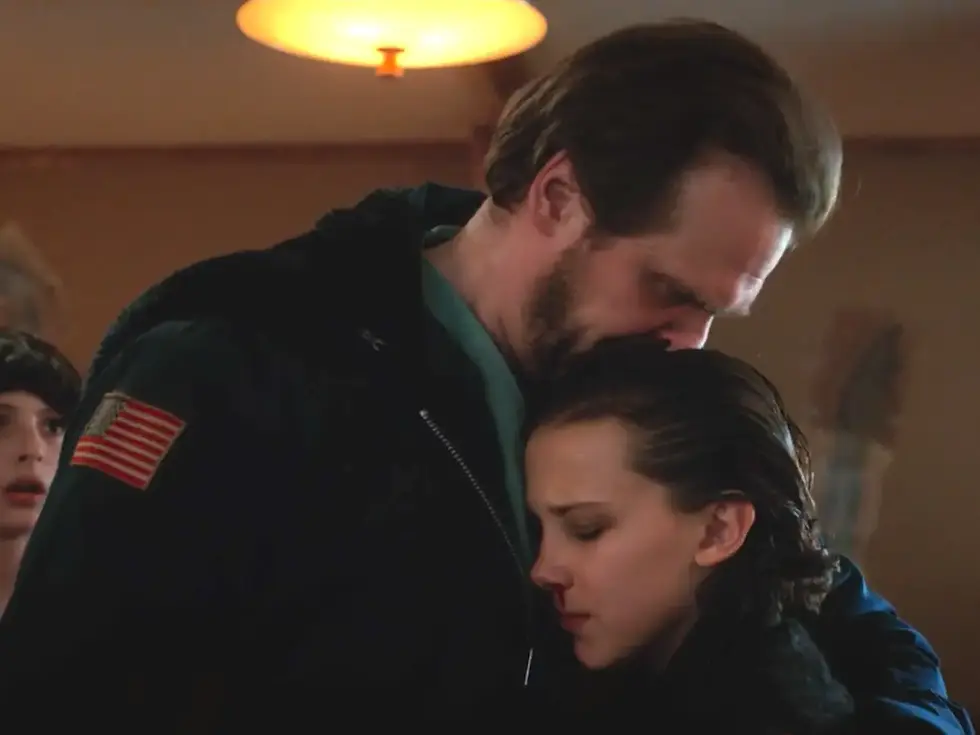
Image Credits: https://www.businessinsider.com/golden-globes-2018-stranger-things-eleven-hopper-2018-1
Primary Bible Reading(s)
John 1:1-18
1 In the beginning was the Word, and the Word was with God, and the Word was God. 2 He was in the beginning with God. 3 All things came into being through him, and without him not one thing came into being. What has come into being 4 in him was life, and the life was the light of all people. 5 The light shines in the darkness, and the darkness did not overtake it. 6 There was a man sent from God whose name was John. 7 He came as a witness to testify to the light, so that all might believe through him. 8 He himself was not the light, but he came to testify to the light. 9 The true light, which enlightens everyone, was coming into the world.] 10 He was in the world, and the world came into being through him, yet the world did not know him. 11 He came to what was his own, and his own people did not accept him. 12 But to all who received him, who believed in his name, he gave power to become children of God, 13 who were born, not of blood or of the will of the flesh or of the will of man, but of God. 14 And the Word became flesh and lived among us, and we have seen his glory, the glory as of a father’s only son, full of grace and truth. 15 (John testified to him and cried out, “This was he of whom I said, ‘He who comes after me ranks ahead of me because he was before me.’”) 16 From his fullness we have all received, grace upon grace. 17 The law indeed was given through Moses; grace and truth came through Jesus Christ. 18 No one has ever seen God. It is the only Son, himself God, who is close to the Father’s heart, who has made him known.
Being Made Children of God
By the Rev. Guillermo A. Arboleda, Program Manager for New Starts, ELCA
Last week, between Christmas and the New Year, like tens of millions of other people, I spent a few hours watching the fifth and final season of the Netflix series called Stranger Things. I promise that I’m not going to spoil anything if you’re a fan who hasn’t gotten to watch it yet. And if you’re not into Stranger Things and its complex, nerdy lore, I promise that I’m not going to bore you by getting into any of that either. But one of the central relationships in the show is between “Eleven”, a teenage girl with supernatural powers (portrayed by Millie Bobbie Brown) and Jim Hopper, a depressed police chief whose biological daughter died from cancer before the series (portrayed by David Harbour). Hopper essentially adopts Eleven early on in the show, and their found family bond becomes one of the beating hearts of the series. Over and over in the show, Eleven is in some kind of danger and Hopper goes into 80s action star papa bear mode, going to any length to protect her, even when he is totally outmatched. He loves her fiercely and will do whatever it takes to defend her.
I thought of these characters because this week’s readings are about God’s fierce love for us. We’re still in the Christmas season, which means we are still reflecting on the birth of Jesus, the Son of God. But today’s readings step back a bit. They don’t focus on the nitty gritty details of Mary and Joseph traveling to Bethlehem to deliver their baby in a barn. They don’t focus on the shepherds or angels or magi who come to visit the Holy Family. Instead, these readings are very transcendent and cosmic. They focus on what is happening behind the scenes: What does it mean for God to become a human being in the form of Jesus? Jeremiah, Paul, and John each compare it to the love between a father and a child, especially an adopted child.
First, in the familiar opening to the Gospel of John, we learn that Jesus, called “the Word”, was there in the beginning. The Word both is God and was with God, creating all things and giving light and life to the world (John 1:1-4). But human beings rebelled against God and rejected God’s ways. We turned away from the divine. But God didn’t leave us hopeless. When Jesus was born, the Word of God became human flesh (John 1:14). By becoming a human being, God gave human beings “power to become children of God” (John 1:12). By grace, God came to earth to adopt us as children. Rather than letting us wallow apart from God, God closed the gap. God ran toward us, not away from us.
Jeremiah uses some of the same imagery when talking about rescuing the people of Israel from their exile in Babylon. Through the prophet, God says, “I am going to bring them from the land of the north and gather them from the farthest parts of the earth … for I have become a father to Israel” (Jeremiah 31:8a, 9b). Notice that God doesn’t say, “because I am Israel’s father.” In this prophecy, God says, “I have become a father to Israel.” That’s the language of adoption.
Similarly, in Ephesians, Paul comes right out and says it. God “has destined us for adoption as [God’s] children through Jesus Christ, according to the good pleasure of [God’s] will” (Ephesians 1:5). God became a human being in order to draw human beings and the rest of creation back to God. God became one of us so that we could all be adopted children of God, through Jesus Christ. In verse 11, Paul goes on to say that we share in Jesus’s heavenly inheritance, and we were marked with the seal of the Holy Spirit (words we use during baptisms). What he is getting at here is that Jesus humbled himself to share his privileges as God’s Son with the rest of us creatures. Now we also can claim that we are adopted children of God. This is a big deal because most world religions relate to the divine as though we are servants or slaves of God. Many people believe that we human beings are not worthy of divine love or even interest. But the Good News of Jesus is different. God loves us enough to be with us here and remain with us even now through the Holy Spirit. The Incarnation didn’t happen just one time 2000 years ago. It’s still happening here and now because God is with us in the flesh of each human being you meet.
The movement is from heaven toward earth. God chose to be incarnated and born as a human being on Christmas. These Bible readings, especially John 1, are trying to hammer home that this is the most groundbreaking thing that has ever happened. God refused to abandon us. God broke all the rules of nature to infuse human nature with the divine. God did whatever it took to love us and rescue us. Like Hopper and his fierce love for Eleven, God never has and never will give up on us. Like Hopper, God does not treat us with any less love and devotion because we are adopted children. God goes above and beyond to make sure that we are rescued, giving all of us “grace upon grace” (John 1:16).
So, as we near the end of Christmas, rejoice again that God loves us so enormously. Give thanks for that grace. And remember that everyone you meet is also an adopted child of God, loved in just the same way that you and me are. So, let us love our neighbors with that same grace and love that we have received so abundantly. Amen.


Comments