Why Galilee? (3rd Epiphany A)
Updated: Jul 5
A sermon by the Rev. Guillermo A. Arboleda, written for and delivered at All Saints' Episcopal Church, Tybee Island, GA, on Sunday, January 25, 2026, the 3rd Sunday after the Epiphany (Year A).
Primary Bible Reading(s)
Matthew 4:12-23 (NRSVue)
12 Now when Jesus heard that John had been arrested, he withdrew to Galilee. 13 He left Nazareth and made his home in Capernaum by the sea, in the territory of Zebulun and Naphtali, 14 so that what had been spoken through the prophet Isaiah might be fulfilled: 15 “Land of Zebulun, land of Naphtali, on the road by the sea, across the Jordan, Galilee of the gentiles—16 the people who sat in darkness have seen a great light, and for those who sat in the region and shadow of death light has dawned.” 17 From that time Jesus began to proclaim, “Repent, for the kingdom of heaven has come near.” 18 As he walked by the Sea of Galilee, he saw two brothers, Simon, who is called Peter, and Andrew his brother, casting a net into the sea—for they were fishers. 19 And he said to them, “Follow me, and I will make you fishers of people.” 20 Immediately they left their nets and followed him. 21 As he went from there, he saw two other brothers, James son of Zebedee and his brother John, in the boat with their father Zebedee, mending their nets, and he called them. 22 Immediately they left the boat and their father and followed him. 23 Jesus went throughout all Galilee, teaching in their synagogues and proclaiming the good news of the kingdom and curing every disease and every sickness among the people.
Why Galilee?
By the Rev. Guillermo A. Arboleda, Program Manager for New Starts, ELCA
Today’s Gospel reading picks up again immediately after John baptized Jesus in the Jordan River. We eventually hear an alternate version of how Jesus recruits Andrew and Simon Peter to follow him as disciples — calling them from the lakeshore while they fished, rather than last week’s version of the story from the Gospel of John. But before we get to the meat of that story, Matthew adds some editorial commentary.
This Gospel takes time to explain why Jesus left his parents’ home in Nazareth and began his ministry in Capernaum, on the shore of the Sea of Galilee. Matthew insists that Jesus preached and ministered there because it fulfilled one of Isaiah’s ancient prophecies. You’ll only find this reference here in Matthew, not in Mark, Luke, or John. So it’s a bit unusual. Because the lectionary is clever, we read that portion of Isaiah 9 as our Old Testament reading this morning.
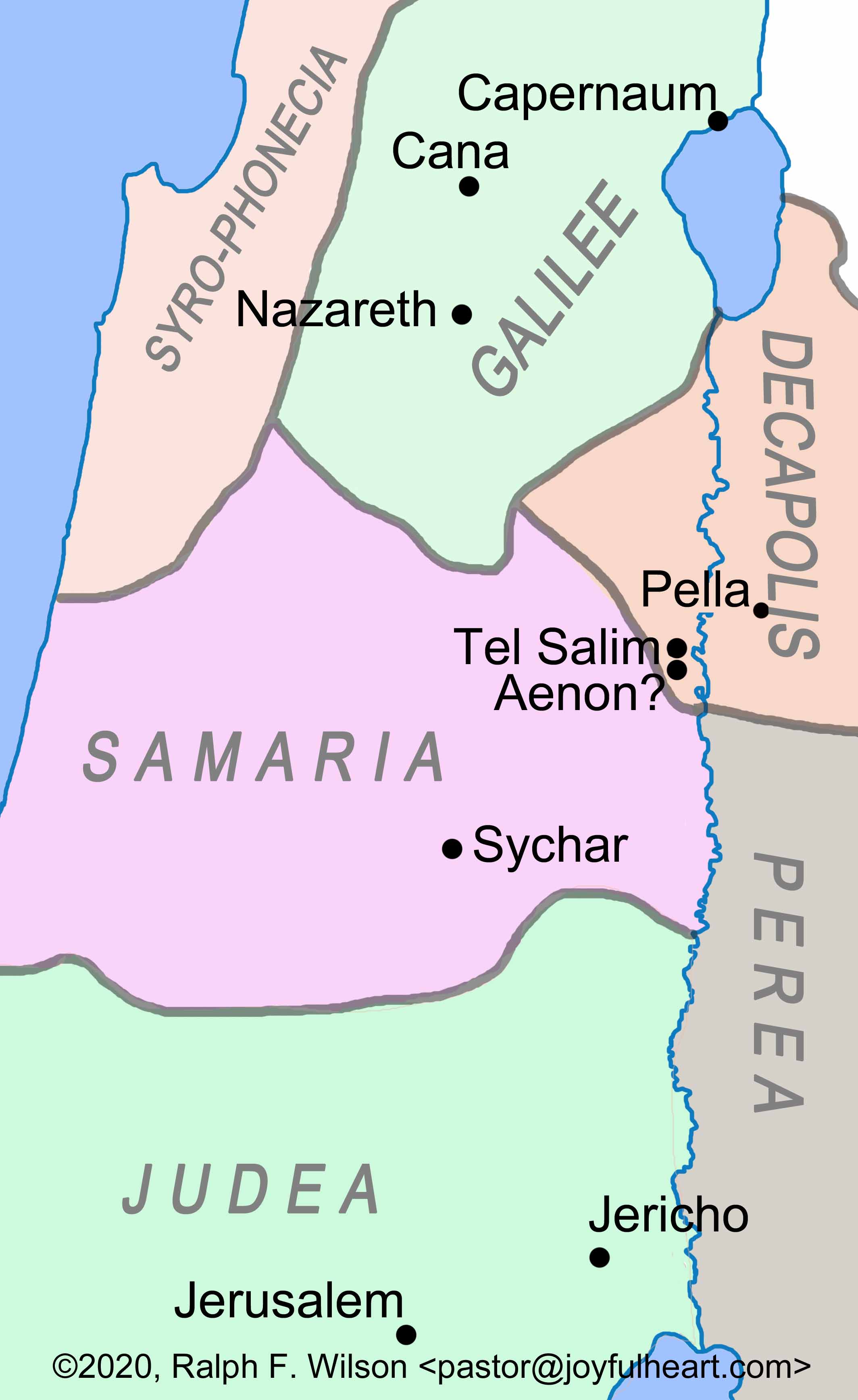
Both Matthew and Isaiah start out by referring to this area as the territory of Zebulun and Naphtali. Zebulun and Naphtali are two of the twelve tribes of Israel, and each tribe was assigned some land in the Old Testament. Nazareth happens to be in the territory of Zebulun, due north of Jerusalem. Capernaum and the western shore of the Sea of Galilee are in the territory of Naphtali. Matthew wants to root Jesus in the history of the Israelite people. He was an inheritor of all of God’s promises to Israel over the centuries.
But you might be thinking, “That’s kind of neat, but why does Matthew need to explain why Jesus is in Galilee?” If you’ve been to church for a long time, you have heard stories about Jesus and the Sea of Galilee dozens or hundreds of times. The association between Jesus and that area is normal to us. But it wasn’t what first century Jews expected from their Messiah and Savior. If someone is going to be a new king and savior, a new Son of the great King David, then it makes sense that he was born in Bethlehem, like David. And it would make plenty of sense for Jesus’ ministry to be rooted in Jerusalem, the political and religious capital of the region. There, Jesus could have mingled day by day with Jewish priests and rabbis, with Roman governors and generals. He could have established himself as a true political and religious change agent. But instead, he began his ministry about 100 miles north of Jerusalem around a glorified lake that locals called a sea. It begged some explanation.
So, Matthew points to this prophecy from Isaiah: “Land of Zebulun, land of Naphtali, on the road by the sea, across the Jordan, Galilee of the gentiles—the people who sat in darkness have seen a great light, and for those who sat in the region and shadow of death light has dawned” (Matthew 4:15-16). The people of Galilee “sat in darkness” and the “shadow of death,” but through Jesus, they received “a great light” from God. This refers to the history of the Galilee region being violently conquered by foreign empires.
Isaiah was alive, about 800 years before Jesus. In those days, Galilee was part of the northern kingdom of Israel that had separated from Jerusalem and Judah after a civil war. The Twelve Tribes were divided into ten in the north and two in the south. And during Isaiah’s lifetime, the brutal Assyrian Empire swept through and conquered that northern kingdom. Isaiah’s northern Jewish siblings were slaughtered, their fields burned, and their towns razed. And they never really recovered. After the Assyrians came the Babylonians, then the Persians, then the Greeks, and finally the Romans. Every century or two, another empire would rise and dominate the land of Galilee with new forms of oppression.
By Jesus’ time, Galilee had its own unique culture, distinct from Jerusalem and Judea in the south. Jesus and his disciples were Jews, but Isaiah and Matthew called that region “Galilee of the Gentiles” for a reason. It was very ethnically and culturally diverse. It was a land of commerce and trade, centered around the big lake called Galilee. Jews might have made up most of the population in Galilee at the time, but they were not an overwhelming majority like they were in Jerusalem. They were also separated from Jerusalem and its Temple by the land of Samaria, so getting back and forth to Jerusalem to worship was complicated. Priests and rabbis almost never came from Galilee, and if they did, they needed to be trained in Jerusalem to ensure that they had a proper religious understanding. The culture of Galilee was too cosmopolitan to be trusted.
So, Galilee was culturally different from Jerusalem, and it had an even more brutal history of conquest than Jerusalem. It was not where first-century Jewish people expected their Savior to come from. It’s easy to understand why many people would have considered it a land of darkness.
But that’s also precisely why Jesus ministered there.
Elsewhere, Jesus said, “Those who are well have no need of a physician, but those who are sick” (Matthew 9:12). Jesus began his ministry in Galilee because people there were needy. They were a community of underappreciated, outcast, oppressed people. Galileans were people who the empire forgot; if the Romans ever thought of them it was only to further exploit them. Galileans were looked down upon by their own siblings in Jerusalem. They were religiously and culturally suspect. To the Romans, they were too Jewish. To the Jews, they were too Roman. They didn’t fit in anywhere, and they seemed to have no hope.
But God loves hopeless people. God came to live among people who wandered without hope. God came to stay with people who were hurting. God came to shine a light into their darkness and show them that they were not forgotten or forsaken. Galileans were beloved children of God just like everyone else. Jesus’ ministry there was a sign that they had dignity too. urting Galileans like Peter, Andrew, James, and John became Jesus’ most faithful and devoted followers.
In Jesus’ days, Galileans were an especially marginalized, outcast, hurting group of people. But the truth is that Galilee was not uniquely marginalized or oppressed. Many people groups have histories of losing wars or being conquered. Many people are looked down upon for being different. We could look at almost any ethnicity or culture and find some history of oppression.
So, the point is not that Galilee was special. The point is that God shows up where people hurt the most. God still shows up where people are hurting. The church, as Christ’s hands and feet in the world, is called to be where people are hurting. God calls us to love, comfort, and accompany people even if we cannot fix things. Who in your life is in need now? How can we, as the church, walk alongside people in need and show them God’s mercy and lovingkindness? May God make those answers plain to us. Amen.


Comments